Guide · Bluewater cruising · 3 min read
Sailing around the world as a family: which sailboat to choose?
Size, cabins, safety, autonomy, speed: the criteria for choosing a sailboat for a family circumnavigation or long-term cruising.

Size, cabins, safety, autonomy, speed: the criteria for choosing a sailboat for a family circumnavigation or long-term cruising.
A family voyaging boat is not a couple’s boat made bigger. It must carry a crew partly made up of non-sailors, provide separate spaces for school, play and rest, and remain manageable by a single adult while the other looks after the children.
The choice comes down to three simple questions: can one adult sail it, does everyone have their own space, and is the crew safe in rough seas? The answers shape the size, deck layout and interior.
For a family of four, 11 to 14 metres is the most common range on bluewater routes. It allows three cabins, or two cabins and a dedicated berth, a saloon for schoolwork, and enough tankage for long stays at anchor.
Beyond 14 metres, handling loads, berthing and maintenance costs rise sharply, and the boat becomes harder for one adult to sail. Below 11 metres it is possible, but the lack of space weighs over time.
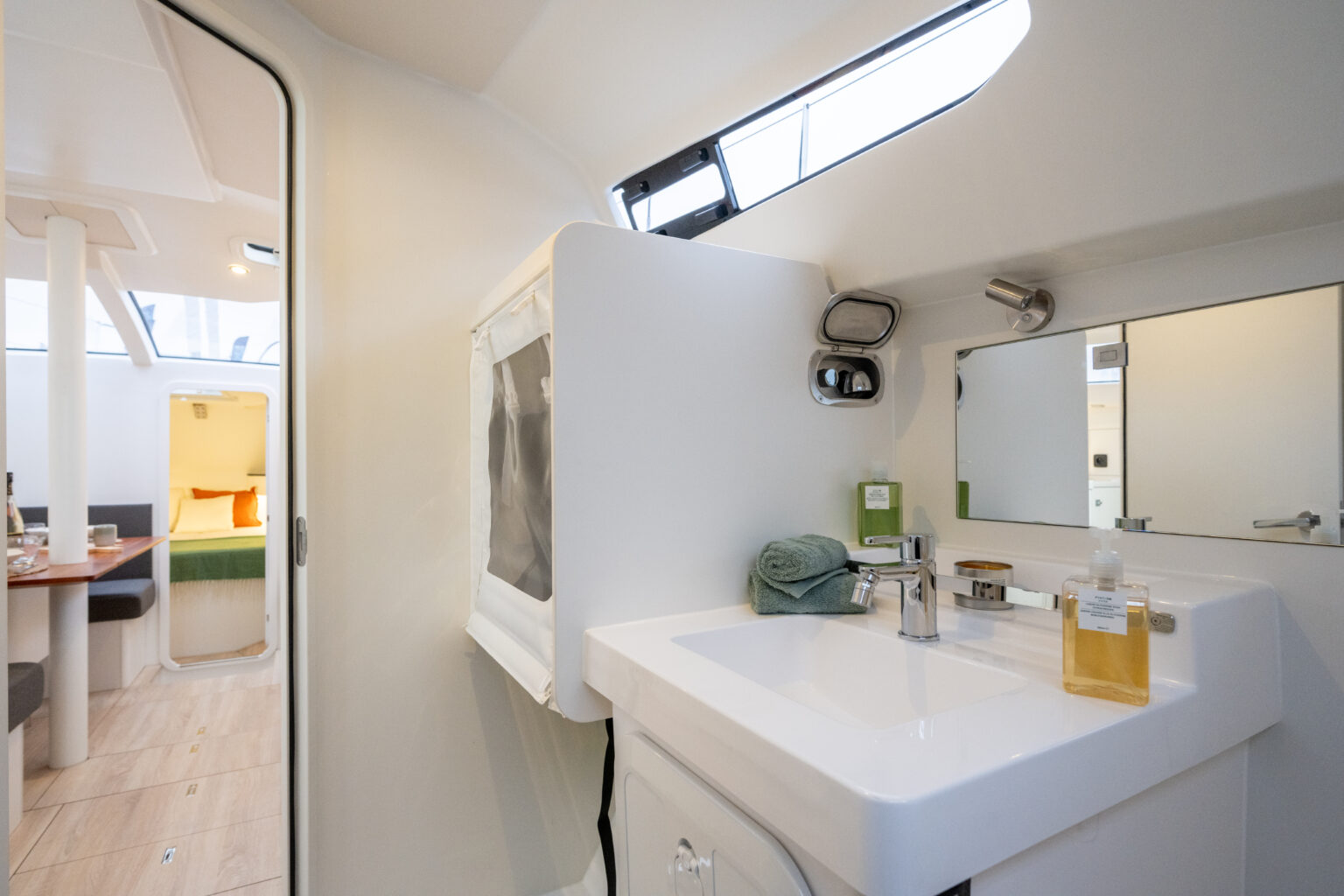
A deep, sheltered cockpit, high guardrails, continuous jacklines and clip-on points reachable from the companionway are selection criteria, not options. Lines led to the cockpit avoid going on deck in heavy weather.
A boat that sails at moderate heel with a gentle helm tires the crew less. This is often underestimated: helmsman fatigue is the first source of error on passage.
A family uses more water than a couple, and stays at anchor are long. Fresh water tanks, space for a watermaker, solar production and battery capacity determine your freedom at anchor.
Storage matters just as much: clothes for several climates, school materials, toys, spare parts. A boat designed for voyaging provides accessible, drained volumes, not just lockers.
A faster boat spends less time at sea, picks better weather windows and arrives before the weather turns. On an Atlantic crossing, gaining a day or two means that much less fatigue and impatience for the children.
Modern hulls derived from offshore racing, wide and powerful, keep moderate heel and good directional stability: a real comfort for a family, not just a sailor’s pleasure.
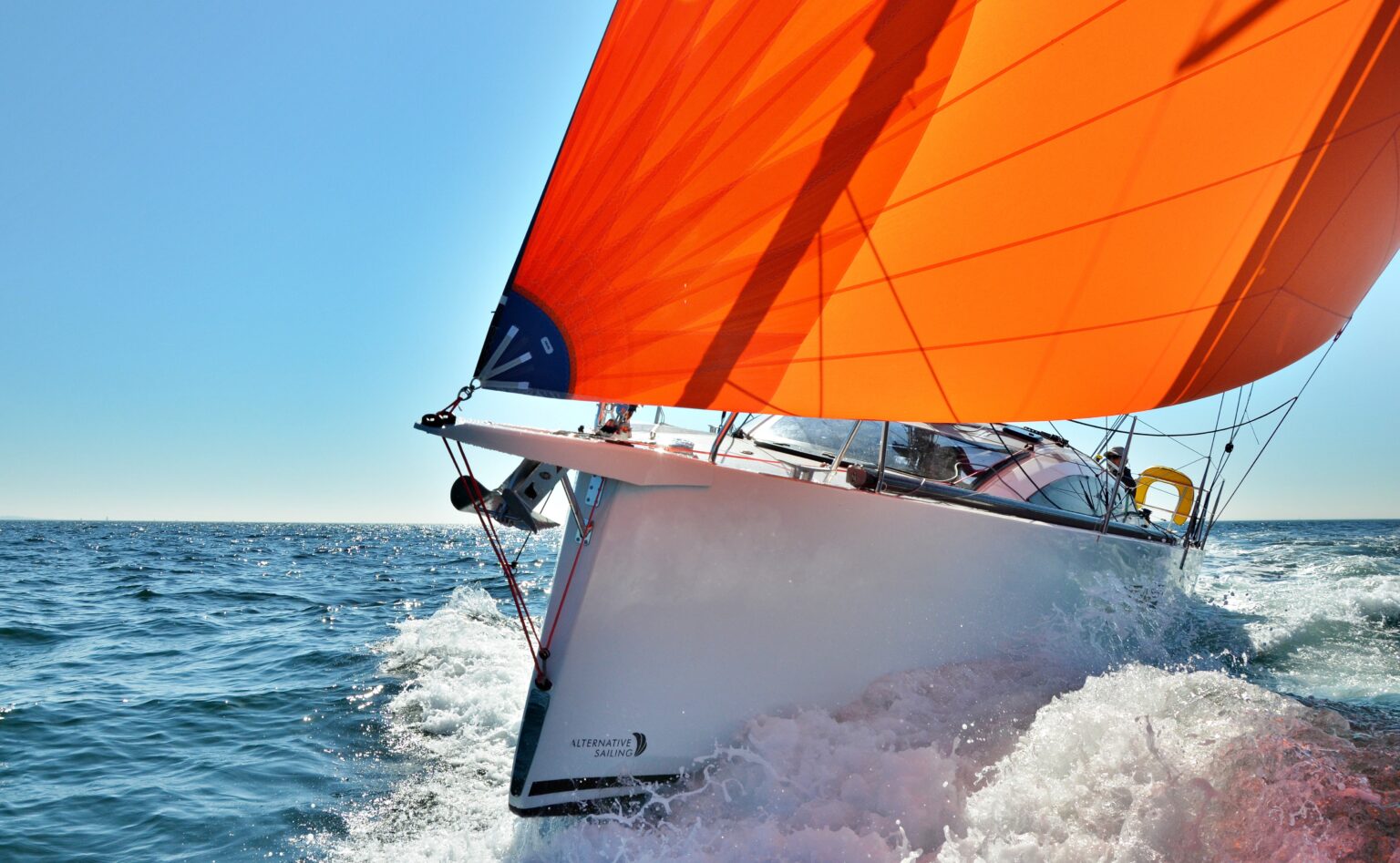
Three RM models are designed for this programme. The RM 1080, a 10.80 m ocean cruiser with 200 L of fresh water. The RM 1180, 11.80 m, whose balance of weight, hull power and living space makes it ideal for long passages with a family crew, with 270 L of water. And the RM 1380, 13.30 m, with 270 L of water extendable to 400 L as an option and a lifting keel version.
All are built in plywood-epoxy, an insulating material that limits condensation and brings real comfort aboard, in the tropics as in cold waters.
Our advice on choosing a bluewater sailboat, and the models suited to family cruising.
Between 11 and 14 metres for a family of four. That size allows three cabins or two cabins and a berth, a saloon for schoolwork and enough autonomy, while remaining manageable by one adult.
A catamaran offers more space and sails flat; a monohull points higher, costs less to berth and maintain, and behaves more predictably in rough seas. The choice depends on budget, programme and crew preferences.
It depends on habits and whether you have a watermaker. Tanks of 200 to 400 litres, combined with a watermaker, give real autonomy at anchor for a family.
Yes. Plywood-epoxy is fully sealed in resin and naturally insulates against heat, which improves comfort aboard and limits condensation.
The RM 1080 for a controlled budget, the RM 1180 for long passages with a family crew, and the RM 1380 for more volume and autonomy, with a lifting keel version.
WhatsApp us