Choosing a sailboat · Size · 3 min read
Choosing the best liveaboard sailboat: what is the right size?
30, 32, 36, 39 or 45 feet: how the size of a cruising sailboat affects space, autonomy, behaviour at sea and speed.

30, 32, 36, 39 or 45 feet: how the size of a cruising sailboat affects space, autonomy, behaviour at sea and speed.
Whether you plan to live aboard for a week, a few months or year-round, length is one of the first buying criteria. For a given number of cabins, it determines the space aboard and how many people can sail comfortably.
| Model | Length | Beam | Light displacement |
|---|---|---|---|
| RM 890+ | 8.90 m | 3.42 m | 3,200 kg |
| RM 980 | 9.80 m | 3.70 m | 4,200 kg |
| RM 1080 | 10.80 m | 4 m | 5,940 kg |
| RM 1180 | 11.80 m | 4.37 m | 7,700 kg |
| RM 1380 | 13.30 m | 4.50 m | 9,800 kg |
Builder’s data.
A longer boat allows bigger cabins, a technical room, a larger galley, more storage for bluewater cruising, a more welcoming saloon and more autonomy: fresh water and fuel tanks grow with size.
The right size depends on your comfort expectations, the gear you carry and the number of people aboard. A solo sailor will be at ease on 30 feet; a family will prefer 36 to 45 feet.
Yes. Size affects motion in a seaway, comfort and performance. A wide hull has more volume, so is more comfortable, but also more powerful: more stiffness and a better ability to accelerate downwind.
RM hulls, inspired by offshore racing, have a plumb bow that increases waterline length. A monohull’s hull speed increases with the square root of waterline length: for the same length overall, a longer waterline gives a potentially faster boat.
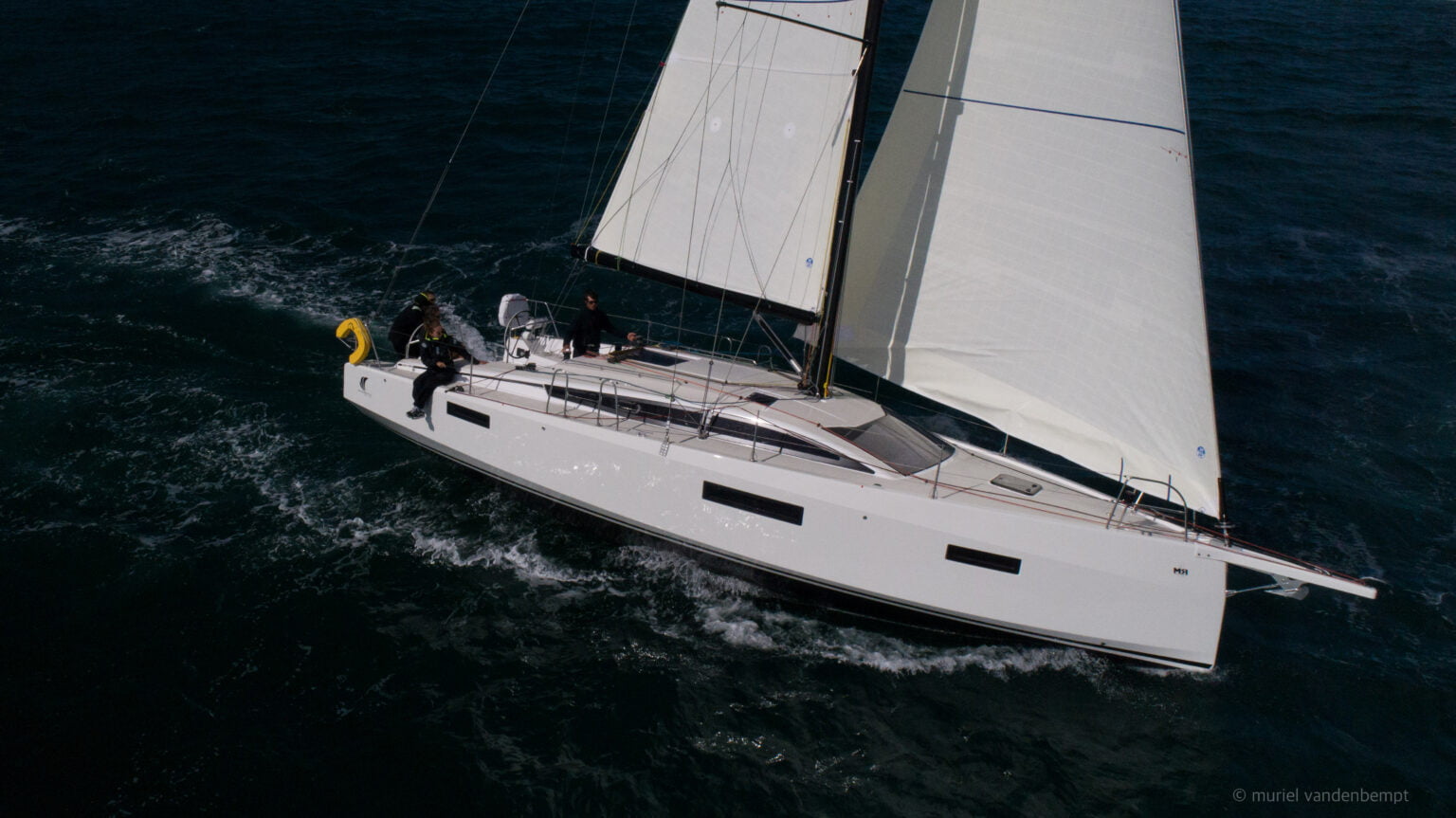
Built in plywood-epoxy, RM yachts are lighter than most boats of the same size built in other materials. This lightness leaves more margin to carry the gear your programme needs — coastal cruising, Atlantic crossing, sabbatical year, circumnavigation — without overloading the boat.
Compare the models and their layouts, from the RM 890+ to the RM 1380.
Between 30 and 39 feet depending on the programme: 30 to 32 feet for coastal cruising, 36 to 39 feet for long passages and crossings.
From 36 to 45 feet, 11 to 14 metres, for separate cabins, storage and sufficient autonomy.
Potentially yes: hull speed increases with the square root of waterline length. Weight, hull shape and sail plan matter just as much.
From 8.90 m for the RM 890+ to 13.30 m for the RM 1380, via the RM 980, RM 1080 and RM 1180.
It accelerates better, keeps moving in light airs and leaves more margin to carry voyaging gear.
WhatsApp us