Guide · Construction · 3 min read
Maintaining a plywood-epoxy sailboat
What to monitor, annual routines, repairing impact damage and what to check on a used boat: maintaining a plywood-epoxy sailboat.

What to monitor, annual routines, repairing impact damage and what to check on a used boat: maintaining a plywood-epoxy sailboat.
A plywood-epoxy hull is not a wooden boat in the traditional sense. The plywood is fully encapsulated in epoxy resin, then protected by paint: the wood never comes into contact with water or damp air.
All maintenance follows from this principle. As long as the encapsulation is intact, the wood stays sound, with no rot, no osmosis and no corrosion. The owner’s job is therefore to monitor and preserve that protection.
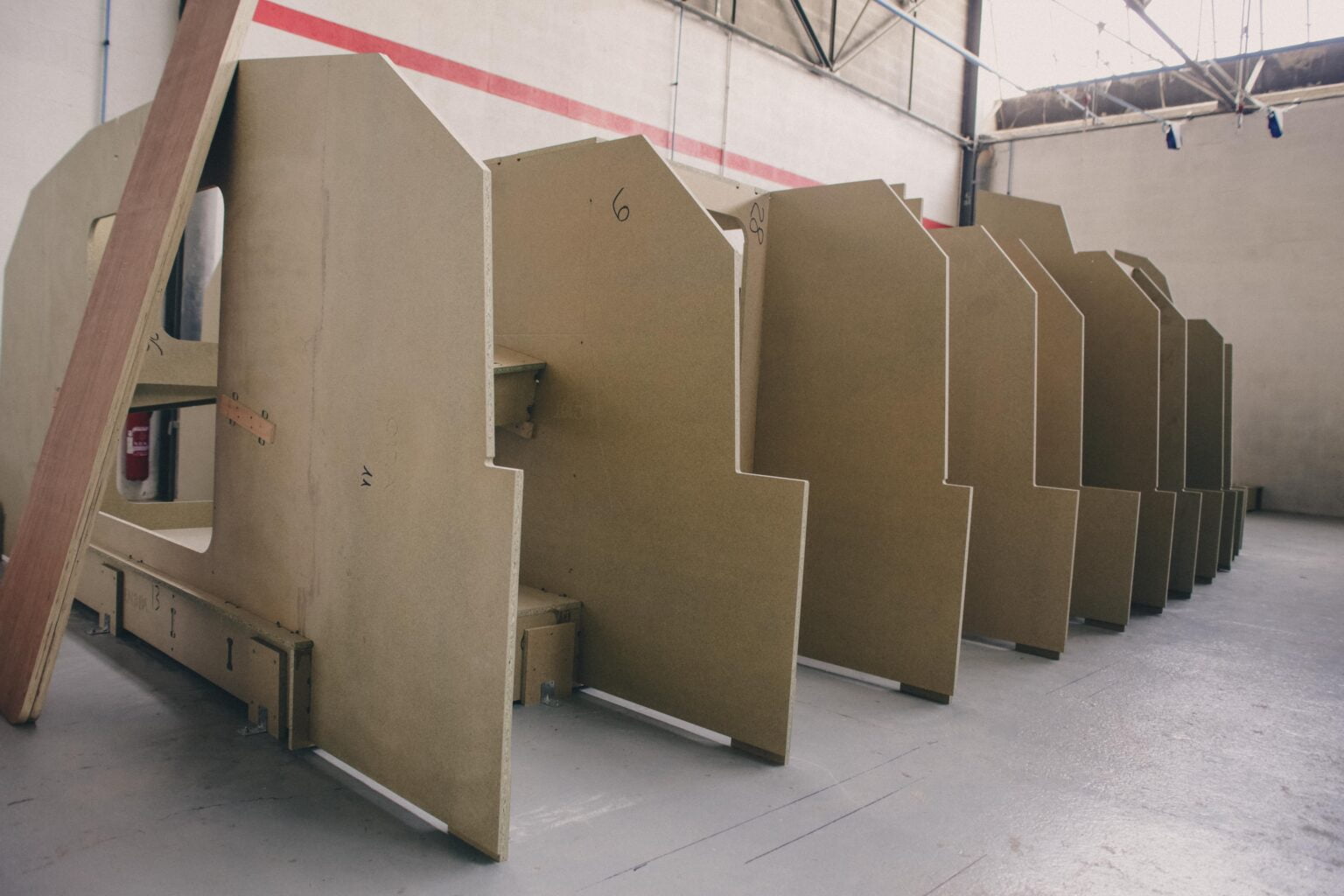
The hull paint is the first barrier: monitor it as on any boat and redo it in good time. Chips and impacts, at anchor, alongside or when drying out, need to be dealt with promptly.
Deck penetrations, deck hardware fastenings and chainplates are the other points to watch: every hole is a potential opening in the encapsulation. An ageing seal should be redone before it lets moisture in.
The haul-out is the same as on a fibreglass boat: lift, clean, antifouling and anodes. There is no osmosis treatment and no particular monitoring of hull electrolysis.
Use the haul-out for a careful visual inspection of the hull, appendages and deck penetrations, and to touch up paint chips. A well-kept hull needs few interventions, but regular ones.
| When | What | Why |
|---|---|---|
| After every outing | Spot chips and impacts | Preserve the encapsulation |
| Every year | Haul-out, antifouling, anodes, visual inspection | Same routine as fibreglass |
| Every year | Check deck penetration seals | Prevent water ingress |
| As needed | Repaint the hull | First protective barrier |
| Every addition | Overdrill, fill with epoxy, redrill | No screw in bare wood |
Repairing a chip or impact on a plywood-epoxy hull uses standard techniques and products available everywhere. Clear the damaged area, make sure the wood is dry, rebuild if needed with thickened epoxy, then re-encapsulate and repaint.
It is one of the great strengths of this construction far from home: a structural repair can be done with simple means, and it lasts. For major damage, the yard and its after-sales network support the owner.
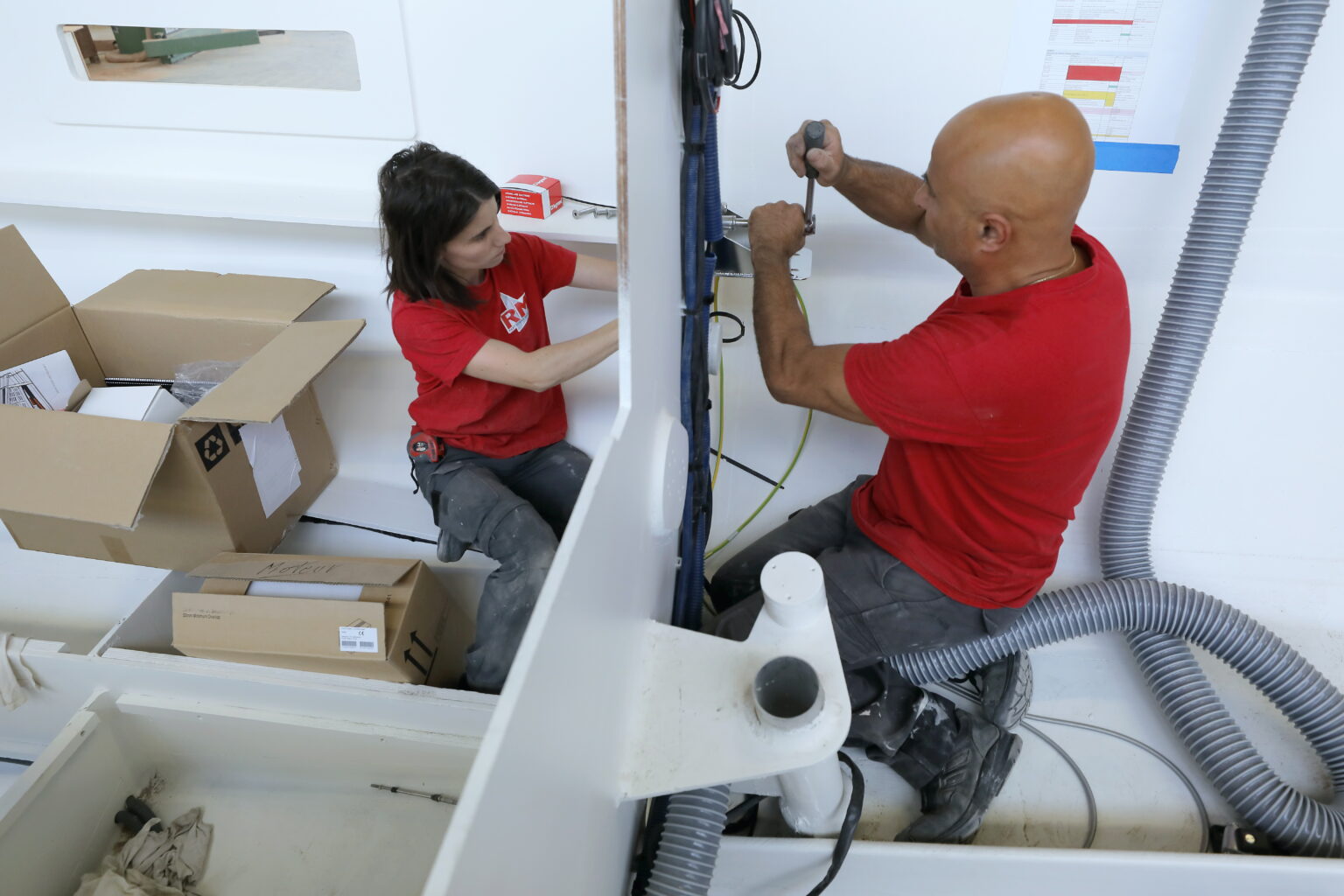
Good practice for any fastening in plywood is to overdrill the hole, fill it with epoxy, then redrill to the right diameter in the cured resin. The screw or bolt never passes through bare wood, and watertightness no longer depends on sealant alone.
Whenever you add equipment, apply this method systematically. It is the step that makes the difference between a hull that stays sound for decades and a leak discovered too late.
On a used boat, the survey covers the condition of the paint and encapsulation, impact areas, deck penetrations and maintenance history. A moisture meter checks for dampness in the wood at sensitive points.
A boat maintained according to these principles keeps its value and strength: RM yachts built some twenty years ago still sell on the second-hand market.
How RM hulls are built, and why this material was chosen for bluewater cruising.
No, as long as the encapsulation is intact: the wood is sealed in resin and never touches water. Maintenance consists of preserving that protection, especially the paint and deck penetrations.
No. The haul-out is the same as for fibreglass, without osmosis treatment. You simply need to monitor the hull paint and deal quickly with impacts.
Clear the area, make sure the wood is dry, rebuild with thickened epoxy, then re-encapsulate and repaint. The products are available everywhere.
Overdrill the hole, fill it with epoxy, then redrill in the cured resin: the fastening never passes through bare wood.
The condition of the paint and encapsulation, impact areas, deck penetrations and maintenance history, with a moisture meter check at sensitive points.
WhatsApp us